Heilen is not a word you hear every day, but it carries a weight that sneaks up on you. I first encountered it in a small Bavarian town。scribbled on a note left by a neighbor after a storm had torn the roof off the old chapel. 'Wir müssen heilen,' it read — we must heal. The word stuck. In German, heilen means to heal, to cure, to make whole. It's a verb that demands action, not just hope. You don't heilen by waiting;you heilen by doing. That distinction matters. Healing is rarely passive, and heilen as a concept refuses to let you off the hook.Look at how heilen works in practice. A doctor heilt a wound. A therapist heilt a mind. A community heilt after a disaster. The verb scales from the microscopic to the monumental. I've watched a carpenter in the Black Forest use heilen to describe fixing a cracked beam — not replacing it, but restoring its integrity. He ran his hand along the wood and said, 'Heilen ist geduldige Arbeit.' Healing is patient work. That line has stayed with me for years. It's a reminder that heilen isn't about quick fixes. It's about understanding the damage and working with it, not against it.Heilen also shows up in less obvious places. In linguistics, heilen refers to the resolution of a narrative arc — the moment a story's tension releases and the pieces click into place. I've felt that in novels that earn their endings. You close the book and think。yes, that heilt. It's the same sensation as a good conversation that leaves you lighter. The word stretches beyond medicine into art, into relationships, into the quiet corners of daily life. A friend once told me that learning to forgive her father was a form of heilen. She didn't mean it as a metaphor. She meant it as work — hard, unglamorous, necessary work.What makes heilen so compelling is its refusal to romanticize. Healing is messy. It involves setbacks。scar tissue, and moments when you think you're back at the start. The word doesn't promise perfection;
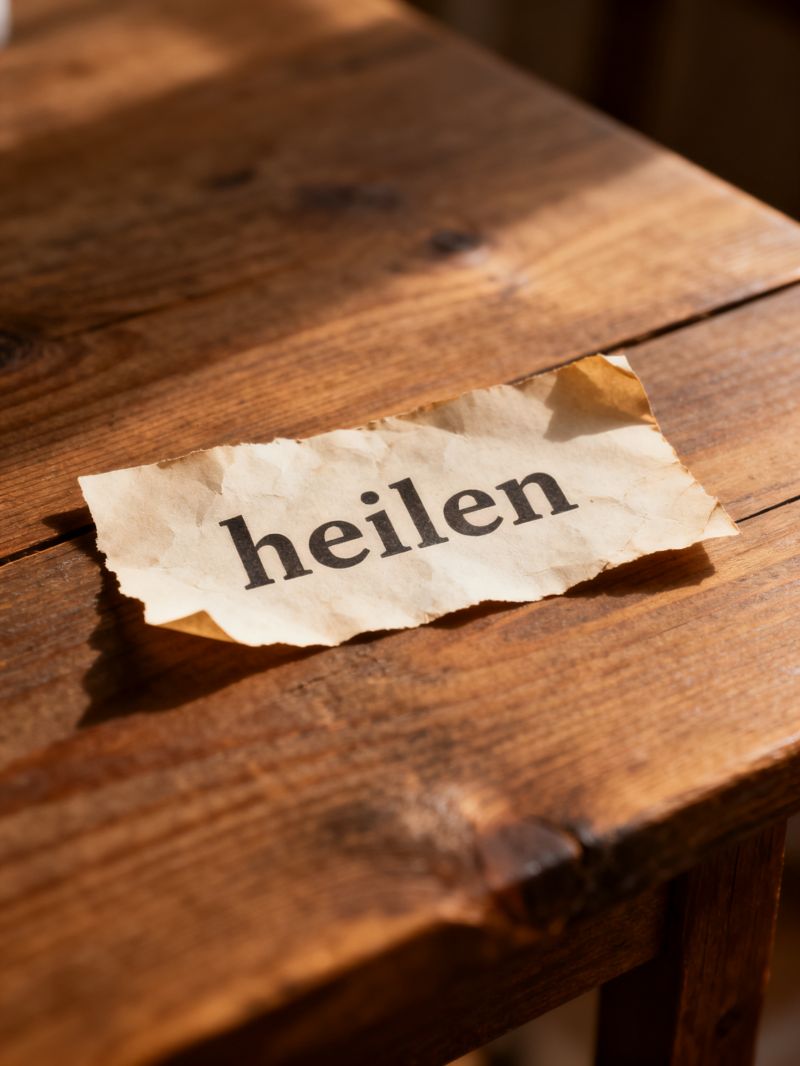
it promises process. In a culture obsessed with outcomes, heilen is a quiet rebellion. It says the journey counts. I've started using it in English conversations, and people often pause. They ask what it means. I tell them: it means you don't give up on the broken thing. You stay with it. You work. And over time, something shifts. That's heilen. Not a destination, but a practice.Maybe that's why the word has followed me. In a world that prizes speed。heilen insists on depth. It's a small German verb with a large claim: that wholeness is possible, but only through deliberate, patient effort. I keep the note from that Bavarian chapel on my desk. The ink has faded, but the word remains. Heilen. A reminder that healing is not something that happens to you. It's something you do.